Buying art · Sizing
What size art goes above a sofa, a bed, a sideboard.
Undersized art is the most common mistake in an Australian living room, and the only one you cannot undo once the holes are in the wall. There is a calculation that fixes it, and it takes about a minute.
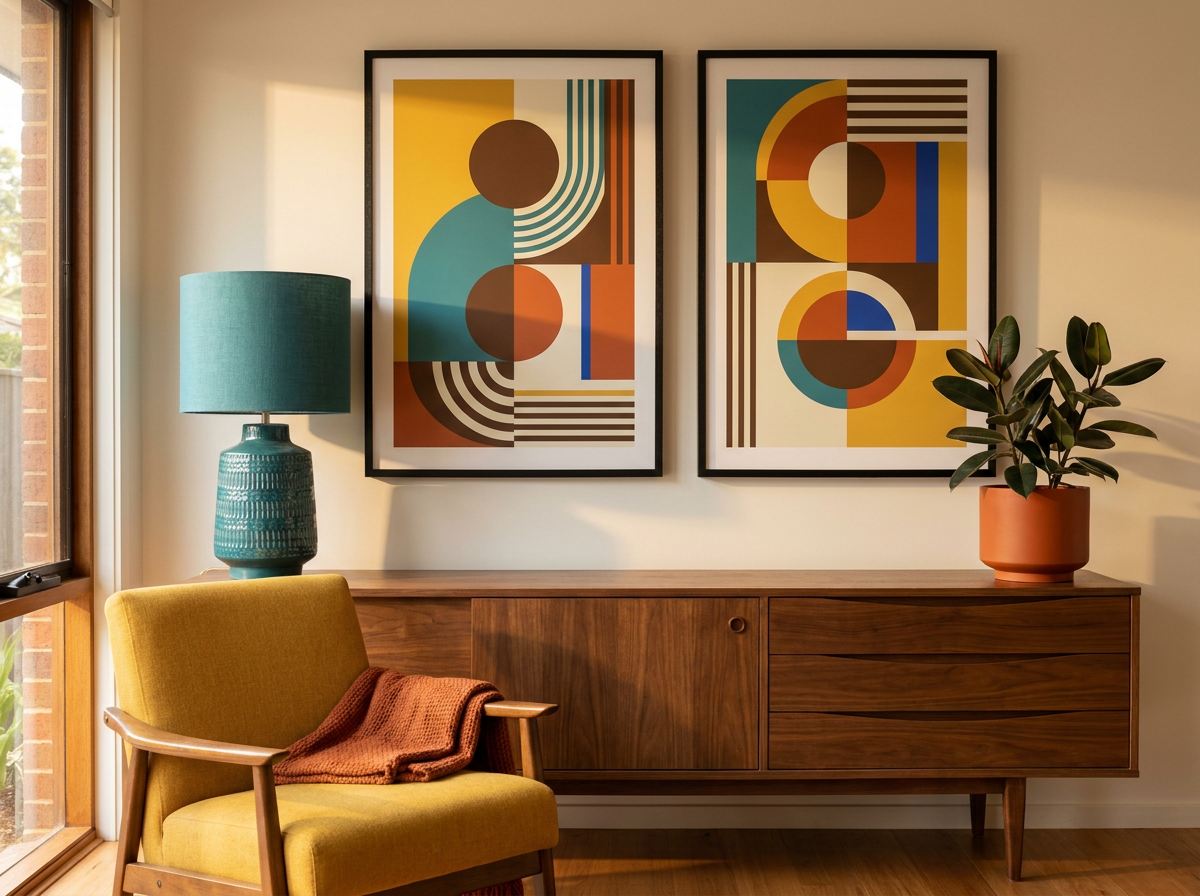
Arithmetic, not opinion. Every measurement below is either a standard paper size or a calculation, and the working is shown. Check it against your own wall before you drill.
The calculation
The reference point is the furniture underneath, not the wall. The convention designers use is two-thirds of the furniture's width — and it applies to the whole arrangement, not to any one piece in it.
| Underneath | Its width | Art should span | Which is |
|---|---|---|---|
| Two-seater sofa | 160 cm | ~107 cm | Three A3s (103 cm), or two A2s (91 cm) |
| Three-seater sofa | 210 cm | ~140 cm | Three A2s (140 cm) — the exact fit |
| Queen bed head | 153 cm | ~102 cm | Two A2s with a 15 cm gap (99 cm) |
| King bed head | 183 cm | ~122 cm | Two A1s (134 cm), or three A2s (140 cm) |
| Sideboard | 120 cm | ~80 cm | One A1 landscape (84 cm), or two A2s (91 cm) |
| Console table | 100 cm | ~67 cm | One A2 landscape (59 cm), or three A4s (73 cm) |
The arithmetic on the three-seater row, because it is the one people get wrong: three A2s hung portrait are 42 cm wide each, so 126 cm of paper. Two 7 cm gaps adds 14 cm. Total 140 cm, against a 140 cm target. That is why sets of three exist.
None of those land on the target exactly, and they don't need to. Two-thirds is a target to get near, not a figure to hit — anywhere between about 60 and 80 per cent of the furniture width looks right. What does not look right is 20 per cent.
A single A3 above a three-seater spans 30 cm against a 140 cm target — about a fifth of what the wall is asking for. That is the mistake, and it costs nothing to avoid.
Which sizes those numbers mean
| Size | Centimetres | Where it works |
|---|---|---|
| A4 | 21 × 29.7 | Hallways, gallery walls, anywhere seen from about a metre. |
| A3 | 29.7 × 42 | The safe single print. Above a bedside table, a desk, a narrow wall. |
| A2 | 42 × 59.4 | A statement in a bedroom, or one of three above a sofa. |
| A1 | 59.4 × 84.1 | A single piece above a sofa or bed head, given the ceiling height for it. |
Sizes from overseas sellers — 30×40, 50×70, 18×24 inches — are close to these but not the same, and the near-misses are what stop a print sitting in an off-the-shelf frame. The full conversion table and the two traps are on print sizes explained.
What the frame adds
You are not hanging the print, you are hanging the frame. A framed print with a mat is considerably bigger than the paper inside it:
- A standard mat border adds 5–7 cm on every side.
- The frame moulding adds another 2–4 cm on every side.
So an A3 print (29.7 × 42 cm) matted and framed occupies roughly 45 × 57 cm of wall. An A2 becomes about 58 × 75 cm. Plan with the framed figure, not the paper figure, or your gallery wall will not fit.
This cuts the other way too: matting is how you make a small print look intentional. An A4 in a wide-matted frame reads as a considered object. The same A4 with a thin frame and no mat reads as a certificate.
Portrait or landscape
Match the shape of the space, not the shape of the picture. A wide, low wall — above a bed head, behind a sofa, over a sideboard — wants landscape or a horizontal row of portraits. A narrow wall between two doors, or a wall with high ceilings and nothing under it, wants portrait. If you are buying a set, keep every piece in the same orientation; mixed orientations in one group need a much more confident hand than the rule of thumb can supply.
The short answer
If you want one number to carry around: most people should buy one size up from the one they were about to buy. Undersized art is the single most common complaint, and it is irreversible once the holes are in the wall.
Now find the colours
Photograph the room, and the matcher reads the palette out of it — then shows you which prints sit in those colours, and what they look like on paper rather than on a screen.
Or plan the group first
Give it your wall width and the print sizes, and it returns the exact gaps and nail positions — no paper templates, no second set of holes.